
It's 6:30 a.m. on a Saturday, and you get a text: the line cook scheduled for the brunch rush just called in sick. Two servers have already booked the day off. The host stand is short too, and doors open in 90 minutes.
Absence management combines policy, process, and software that determines whether a missing shift becomes a quick fix or a full-blown scramble. Done well, gaps get covered before customers notice. Done poorly, absences lead to overtime, exhausted coworkers, and inconsistent customer service.
Discover what absence management means, why it carries extra weight in frontline industries, what a solid policy should include, how software handles the heavy lifting, and how leaders can reduce absenteeism.
What Is Absence Management?
Absence management is the systematic process of tracking, managing, and reducing employee time away from work, covering everything from approved holiday to last-minute no-shows. For frontline employers, it’s both an HR policy and an operational discipline, because every uncovered shift has an immediate impact on business performance.
It’s critical that an absence management strategy treats planned and unplanned absences differently.
Planned leave
- Holiday
- PTO
- Scheduled medical appointments
- FMLA leave requested in advance
Unplanned absences
- No-shows
- Same-day callouts
- Sudden illness
Planned leave can be scheduled around. Unplanned absences are the ones that test a business in real time, and they're what a strong employee absence management system needs to catch early.
Why Absence Management Matters for Frontline Employers
The cost of absence management shows up on the floor long before it appears in a spreadsheet. The financial and legal stakes are real, but the operational stakes impact the business first.
The Operational Cost of Unplanned Absences
When a shift goes uncovered, managers scramble for coverage, employees who do show up absorb the extra workload, and overtime costs climb as managers patch gaps with whoever's already on the clock. Customers feel it through slower service and longer wait times.
According to the U.S. Bureau of Labour Statistics, employees in food preparation and serving occupations had an absence rate of 4% in 2025, above the 3.2% national average for full-time workers and higher than nearly any other occupation the agency tracks. For multi-location operators, the costs of unplanned absences multiply across locations, shifts, and weeks.
Coverage gaps and employee disengagement influence each other. Gallup found that highly engaged teams report 78% less absenteeism than disengaged ones. This gap widens in frontline, high-turnover organisations.
Compliance Risk
Operational disruption is only part of the challenge. Employers also face growing compliance requirements.
- The Family and Medical Leave Act (FMLA) protects eligible employees' jobs during certain medical and family leaves.
- The Americans with Disabilities Act (ADA) requires reasonable accommodation for absences tied to a disability.
- A growing list of states have passed their own paid sick and family leave laws, each with its own accrual rates and notice requirements.
Multi-state operators don't need to memorize every jurisdiction, but they do need a system that tracks which rules apply where and flags issues before they become violations.
Key Components of an Absence Management Policy
Effective employee absence management starts with a clear, written policy that defines what qualifies as an absence, how employees report one, how it is tracked, and what support is available to prevent burnout before it starts.
Here are key components to keep in mind:
- Absence types: Distinguish scheduled absences, like PTO, FMLA, and personal days, from unscheduled ones, like last-minute callouts and no-shows.
- Reporting procedure: Define exactly how and when employees report an absence, so nothing falls through the cracks.
- Tracking method: Pick one system that logs every absence and makes patterns visible by role, shift, and location. Trying to track employee time off across spreadsheets and group texts makes it difficult to spot recurring patterns.
- Enforcement and consequences: Progressive discipline fits repeated, unexcused no-shows. Coaching and flexibility fit a one-off absence, like a sick kid or a flat tire.
- Employee options and resources: Flexible scheduling, mental health resources, and the option to swap a shift instead of missing it outright all reduce absences before they happen.
How Absence Management Software Saves Time and Money
Absence management software automates the leave request, approval, and tracking process, so managers spend less time on paperwork and more time coaching their teams.
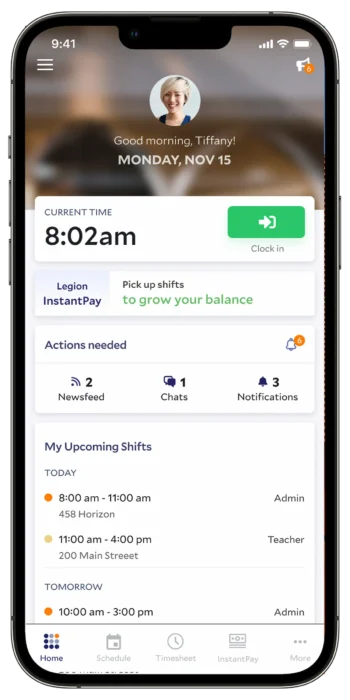
- Automated leave requests and approvals: When employees can easily submit requests on their phones, it prevents requests and approvals from falling through the cracks while giving managers visibility into attendance patterns over time.
- Accrual tracking: When PTO and sick time accrue automatically, the right tool removes manual errors that can lead to disagreements and confusion.
- Compliance guardrails: Built-in FMLA, ADA, and leave tracking help managers stay compliant by flagging issues before they become violations.
- Integration with scheduling and payroll: When someone calls out, the open shift surfaces automatically instead of getting buried in a group chat. Combining absence data with time and attendance management keeps hours, accruals, and payroll in sync.
- Clear overview: The software provides real-time visibility into who's out at every location, instead of relying on information scattered across multiple managers and locations.
How to Choose Absence Management Software
A few things separate a tool built for hourly teams from one designed for a corporate HR function. Look for software that includes:
- Mobile-first design built for shift workers, not salaried employees
- Direct integration with scheduling and payroll vs. an add-on feature
- Built-in compliance tracking for FMLA, ADA, and state leave laws
- Real-time reporting that flags time theft and absence patterns by location or shift
- A track record with multi-location, hourly workforces
How to Reduce Absenteeism on Frontline Teams
Reducing absenteeism on frontline teams comes down to giving employees more control over their schedules and giving managers better tools to fill gaps.
Schedule Flexibility
Preference-based scheduling lets employees set their availability in advance, making them more likely to show up for the shifts they're assigned. Legion customers achieve a 96% schedule match between employee preferences and business needs.
Shift Swapping
When an employee knows ahead of time that they'll be out, automated scheduling lets them trade shifts with a coworker without requiring manager approval for every exchange. This keeps the shift covered and saves up to 50% of a manager’s scheduling time.
Open Shift Claiming
Automated open shift claiming means an uncovered shift gets posted the moment it opens, and any qualified, available employee can claim it from their phone. Managers no longer have to call or text employees one by one, looking for coverage.
Absence Trend Analysis
The patterns matter as much as the individual callouts. A spike in Monday absences at one location, or a shift that consistently runs short, points to a staffing problem worth fixing at the root instead of patching every week. Tools built with shift management can surface those patterns automatically, flagging a location or shift before its absence problem becomes chronic.
Options like Legion integrate these capabilities into one platform designed for frontline hourly work. The goal isn't another disconnected tool. It’s one platform that helps managers respond faster, reduce manual work, and keep schedules on track
Turning Absence Management Into an Advantage
Effective absence management can become a competitive advantage by reducing uncovered shifts, controlling overtime, improving compliance, and preventing employee burnout.
Legion brings absence tracking, scheduling, and compliance together in a single platform built for frontline teams, so managers spend less time firefighting and more time running their business. Schedule a demo to see how it works for your team.
FAQs
What is absence management?
What is the difference between absence management and leave management?
What is frontline absence management?
What is an absence management procedure?
Why is absence management important?
Related Articles



Want to Hear More From Legion?
Sign up to receive the latest industry research, expert-led webinars, and practical WFM resources.
Ready for a Demo?
See how Legion's WFM Software enables intelligent automation to help you maximise labour efficiency and employee engagement simultaneously.