
According to the National Retail Federation, the average turnover rate in the retail industry is about 63%. These high turnover rates are not new, and the ongoing labour shortages remain a top-of-mind challenge for many businesses. According to a recent report by Deloitte, “70% of retail executives say labour shortages – especially in hourly wage jobs – will hamper growth in 2022.” Staffing has always been one of the most prominent challenges retailers face, but what makes it different now, and is some attrition preventable?
While the pandemic isn’t the cause of increased attrition, it is a catalyst for change. A 2019 labour study found that 80% of the U.S. workforce reported feeling stressed at work due to poor communication, and 63% of employees have considered quitting as a result. A study Legion conducted in May 2021 reinforced these findings, uncovering that 39% of workers surveyed would leave their jobs due to poor communications with their managers.
Why Do Hourly Employees Quit
Employees quit because ineffective communications prevent them from doing their jobs or leave them feeling disconnected from their colleagues and companies.
Historically, for hourly workers, trying to communicate with managers and peers is often a manual and inconsistent process that’s frustrating and disengaging. Businesses have invested in communications tools for desk workers who use computers, but 80% of the frontline hourly workforce is “deskless.” Due to compliance and cost concerns, businesses have been reluctant to provide them with digital tools, such as email.
The good news is that this kind of attrition is preventable, and it’s the perfect time to look at new technology and strategies to help retain the employees you need to grow.
Unlock the Power of Digital Communications for Hourly Employees
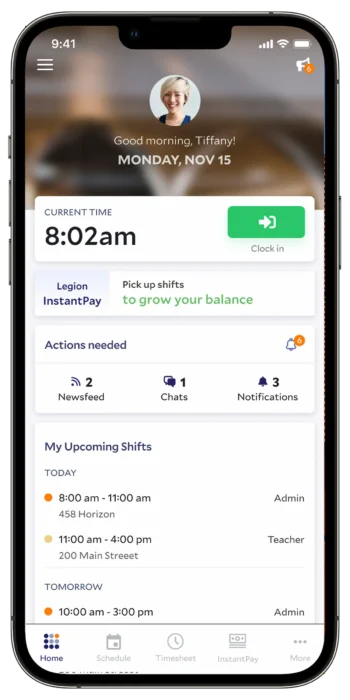
Legion Frontline Communications enables businesses to transform how they communicate with employees—removing barriers that stopped them from providing hourly employees with communications tools in the past. Modern communication tools are designed to improve the experience for frontline hourly employees and enable them to communicate and connect with peers and managers easily. Managers can share information faster by sending a message once that reaches all relevant employees and actually verify that it has been read. A few examples of capabilities with Frontline Communications include:
Newsfeed – Replaces or complements in-store boards to reach employees where they are. You can use Newsfeed to build culture by sharing company news, leadership communications, or highlighting top performers. Or share policy and health updates to all field locations or just specific locations or roles.
Chat messaging – Supports group messaging or one-to-one to help facilitate employee/managers interactions when they can’t meet face-to-face or enable employees to contact each other in a secure, auditable channel.
Full Content Moderation – Provide a safe and compliant environment for employees to communicate. All user-generated content can be moderated. Schedule and time clock data is also leveraged to mitigate the risk of off-the-clock activity.
Learn More
Join us on March 16th for our webcast “Empower, Engage, and Retain Your Hourly Employees with Legion Frontline Communications.” Joining me is Traci Chernoff, Director of Employee Engagement at Legion, and we’ll share insights into the power of improved communications and examples of how other retailers have used better communication tools to turn the tide on attrition.
Related Articles


Want to Hear More From Legion?
Sign up to receive the latest industry research, expert-led webinars, and practical WFM resources.
Ready for a Demo?
See how Legion's WFM Software enables intelligent automation to help you maximise labour efficiency and employee engagement simultaneously.