Your Comprehensive Guide on How to Reduce Labour Costs
September 5, 2024
by Malysa O’Connor

Most businesses today are constantly looking for ways to increase efficiency and improve their bottom line. Labour is the largest controllable expense for many organisations, but reducing labour costs without negatively impacting productivity or employee morale is often challenging.
This balancing act requires a thorough examination of your operations alongside the implementation of intelligent, AI-driven solutions, thoughtful planning, process optimisation, and the necessary reporting to proactively manage costs.
A 1% improvement in labour optimisation can result in millions in savings. Transforming labour operations and controlling costs starts with accurately and precisely predicting demand for each location and customer touchpoint to create optimal schedules.
The Short of It
- Identify and reduce unproductive filler hours and unnecessary overtime.
- Utilise modern workforce solutions to automatically schedule skilled employees during peak hours within weekly schedules.
- Create accurate, precise demand forecasts and labour plans that provide the foundation for generating better schedules.
Practical Strategies for Reducing Labour Costs
Let’s examine some actionable ways to reduce labour costs and improve profit margins. These avenues can improve your operations and boost productivity on the floor.
Minimise Filler Hours
Legion Labour Optimisation is one of the most powerful tools at your disposal to minimise filler hours. Minimising filler hours in schedules involves creating optimised labour plans that align staffing levels with actual demand, reducing idle time and unproductive tasks. By analysing demand patterns, using dynamic scheduling, cross-training employees, and leveraging workforce management tools, businesses can ensure employees are efficiently utilised, leading to greater productivity and cost savings. With it, you can create a labour plan using the most condensed set of hours possible. This allows you to stay within budget, maximise labour law compliance, and provide the best schedules for your employees.
You can automatically create granular, down-to-the-minute task-based labour modeling across all channels, identifying gaps between scheduled hours, demand, budgets, and employee preferences. The model will then automatically adjust to meet objectives.
Legion Labour Optimisation automatically computes optimal labour hours based on precisely forecasted demand, budget constraints, and customer labour standards. It drives efficient labour plans and accounts for all workloads—routine and flexible—to give you more insight into long-term and short-term labour demand with less effort. Some tasks occur consecutively, such as opening and closing, while cleaning and cash reconciliation are fixed and occur simultaneously each day. However, demand-based tasks are more complex.
For example, merchandising jobs depend on truck delivery days, and cash register jobs fluctuate based on sales volumes. Labour Optimisation factors in both tasks with down-to-the-minute granularity and integrates external data to account for last-minute changes, such as delayed deliveries.
Automate Scheduling
With Legion’s intelligently automated scheduling, you can generate schedules that align with budgets, skills, compliance, and employee skills and preferences. This ensures you have the employees needed for every shift while significantly reducing manager time spent on scheduling tasks. Legion’s AI-powered Workforce Management (WFM) ensures that overtime, premium pay, clopening, meal breaks, and other labour regulations are factored in across locations and jurisdictions. Employees also get additional options to access their earned wages without trading convenience.
Using AI, Legion Automated Scheduling creates the optimal schedule that matches business needs with employee preferences 96% of the time. Built-in productivity metrics also help you intuitively schedule top performers during peak periods. During schedule generation, Legion WFM’s multi-location optimisation process automatically assigns employees across locations based on business needs and employee skills and preferences. As you optimise your workforce across multiple locations, you can avoid costly overtime, protect all service levels, and offer gig-like flexibility for hourly employees.
Avoid Unnecessary Overtime
Let’s dig deeper into the need to reduce unnecessary overtime. Efficient employee scheduling minimises wasted labour hours and reduces the reliance on costly overtime. Consider implementing these tactics:
- Forecast demand using Legion Demand Forecasting. Legion WFM enables intelligent automation to precisely predict demand across all customer touchpoints in 15-minute, 30-minute, and daily increments using historical data, sales projections, external factors like weather, holidays, or local events, and internal events such as sales or promotions that could influence customer traffic. Self-learning demand forecasting automatically learns from subtle patterns to continuously improve and adjust to changing conditions—without human intervention. Better forecasts inform scheduling, ensuring you have the right number of employees at the right time.
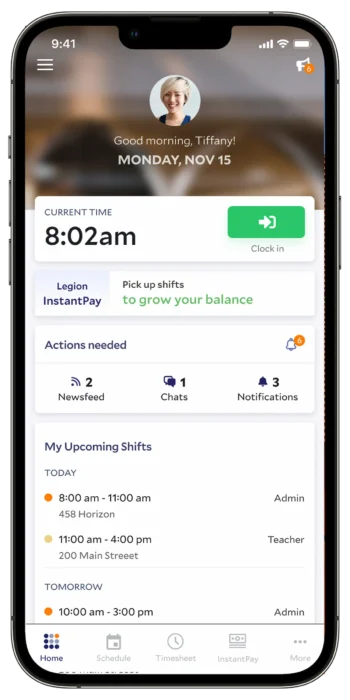
- Utilise shift-swapping technology to empower your team to manage their schedules independently. Legion’s highly-rated mobile app simplifies the shift-swapping process and reduces management overhead while allowing employees to cover each other's shifts, fostering a sense of camaraderie and teamwork.
Embrace Technology and Automation
Technology can significantly streamline operations and reduce reliance on manual tasks, giving you more control over your labour budget.
Until now, the role of enterprise applications was to provide software tools for users to execute business processes, but the users had to make most decisions outside the software. With intelligent automation, this major evolution frees managers and enables unprecedented productivity and business process automation.
Legion’s Workforce Management Software enables intelligent automation to transform labour operations and enhance employee engagement. With it, you can predict demand across all customer touchpoints and locations as it automatically generates the optimal schedule. This reduces human error and eliminates natural biases.
With Reduced Labour Costs, the Future Is Yours for the Taking
Better forecasts, optimised labour plans, and well-structured employee schedules are crucial in controlling labour costs. Accurate forecasts enable businesses to predict demand more effectively, allowing them to allocate resources efficiently. By optimising labour plans, companies can ensure they have the right number of staff at the right time, reducing overstaffing or understaffing issues. Additionally, well-designed employee schedules help minimise overtime expenses and maximise productivity. Together, these strategies contribute to a more streamlined operation, keeping labour costs in check while maintaining service quality.
Ready to learn more about how you can control labour costs through AI-powered WFM? Schedule a demo with us today.
Related Articles



Want to Hear More From Legion?
Sign up to receive the latest industry research, expert-led webinars, and practical WFM resources.
Ready for a Demo?
See how Legion's WFM Software enables intelligent automation to help you maximise labour efficiency and employee engagement simultaneously.